Care Beyond Cure
India's emergence as a healthcare destination for South Asia is often measured in numbers: foreign patients treated, hospitals accredited, surgeries performed and revenues earned.
The CPN-UML chairman used the moment to pay tribute to fallen activists and recall the long years he spent behind bars during the struggle against the Panchayat regime.




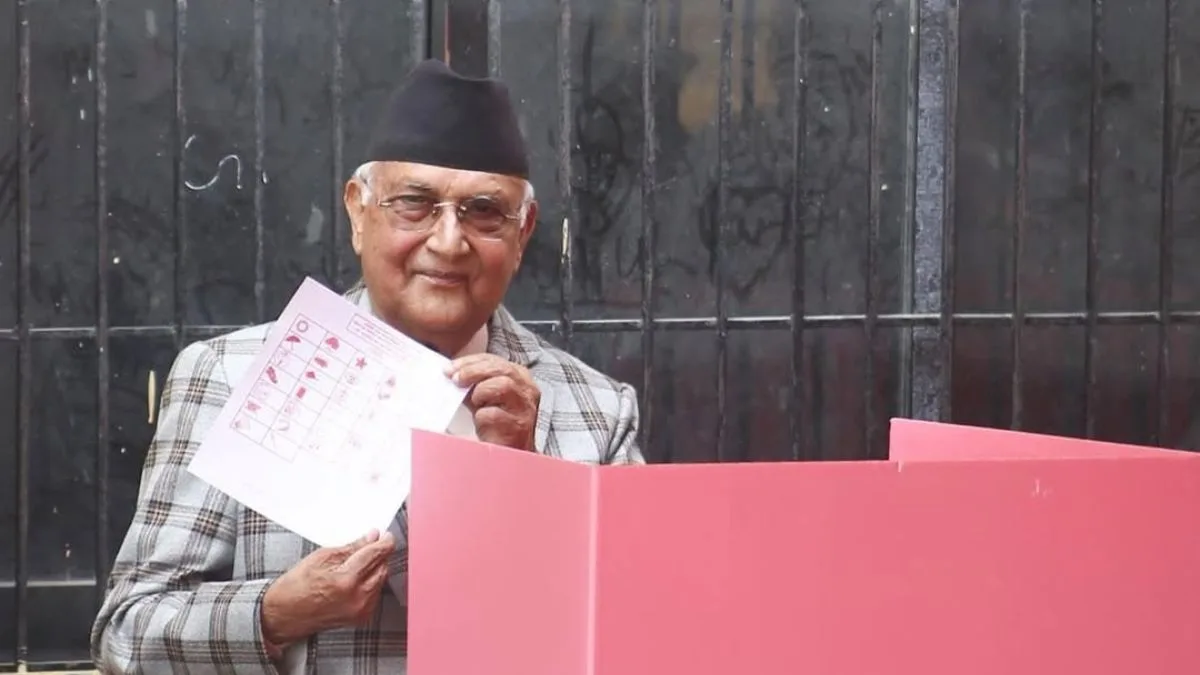
Image Source: Instagram
Some dates quietly pass every year. Others carry stories that refuse to fade. For former Nepali Prime Minister KP Sharma Oli, March 6 (Falgun 21 in Nepali calendar) is one of those days he says he can never forget.
While Nepal remains glued to the high-stakes drama of election day, the former PM chose the moment to revisit a personal memory. He posted on Facebook that this is one date he can never forget; the day he says he escaped death twice, once during the Sukhani martyrs’ killings in the Jhapa movement era and decades later during his life-saving kidney transplant.
Advertisement
Advertisement
March 6 in Nepal marks Sukhani Martyrs’ Day, a dark chapter in the country’s political history.
In his post, Oli recalled the days of the Jhapa movement, a rebellion against the autocratic Panchayat regime in the early 1970s. Many young activists were under arrest during the crackdown. Oli said he too was imprisoned during that turbulent period.
According to him, five fellow activists Ramnath Dahal, Netra Ghimire, Biren Rajbanshi, Krishna Kuinkel and Narayan Rajbanshi were taken out of jail by authorities under the pretext of transferring them to another prison. Instead, they were taken to the Sukhani forest in Jhapa and killed.
Oli said he narrowly escaped the same fate.
He described that moment as one where he “returned from the mouth of death,” while his comrades lost their lives. The killings later became a powerful symbol of resistance against the authoritarian system.
The aftermath of the movement was harsh. Oli wrote that he spent 14 years in prison, a long stretch that shaped his political journey.
Those years, he suggested, were part of the struggle that eventually helped push Nepal toward democratic change.
Remembering the fallen activists, Oli offered a tribute saying their sacrifice played a crucial role in bringing the country toward a democratic dawn.
But the strange coincidence does not end with politics.
Oli pointed out that exactly six years ago on the same date, he underwent his second kidney transplant. The surgery was a critical medical procedure after years of health complications.
He described both events, the political survival decades ago and the life-saving surgery years later, as days when he felt he got “a new life.”
Oli, who served as Nepal’s 38th Prime Minister, has long been one of the country’s most polarising political figures. He has been chairman of the Communist Party of Nepal (UML) since 2014 and served as a Member of Parliament from 2017 to 2025.
His political career has often been centre of controversy from sharp remarks against critics and the media to allegations of cronyism, corruption and nepotism during his time in power.
His government also faced severe backlash after deadly crackdowns during the anti-corruption Gen Z protests, which eventually led to his removal from office.
Advertisement